Sauna guide
How hot should a sauna be? A guide to sauna temperature
July 8, 2026 · 5 min read
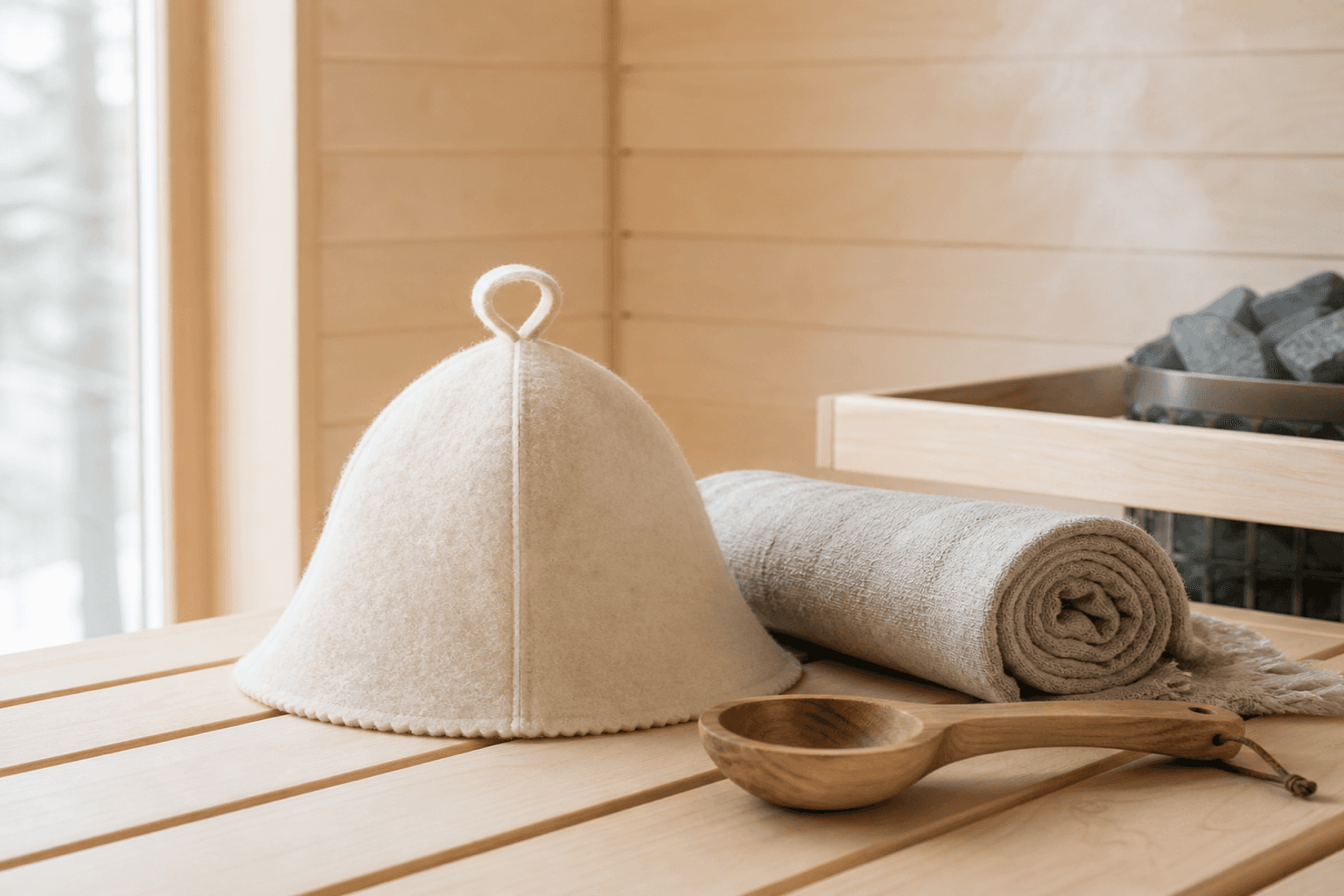
The short answer: most saunas run between 70 and 100°C (about 158–212°F), and a traditional Finnish sauna usually sits around 80–90°C. But 'how hot' is only half the story — humidity, the type of sauna, and where you sit change the experience completely. Here's the full picture, in both °C and °F.
What's a normal sauna temperature?
It depends on the kind of sauna. The rough ranges:
- Traditional / Finnish (dry) sauna — 70–100°C (158–212°F), most often 80–90°C. Low humidity, with bursts of steam when water hits the stones.
- Infrared sauna — 45–60°C (113–140°F). Much cooler air, because infrared warms your body directly rather than heating the room.
- Steam room / hammam — 40–50°C (104–122°F), but at nearly 100% humidity, which makes it feel far hotter than the number suggests.
- Banya (Eastern European) — roughly 60–90°C, with generous steam and often a birch whisk.
Celsius to Fahrenheit: a quick sauna conversion
For the °F crowd, the numbers that actually come up:
- 70°C = 158°F — a gentle, beginner-friendly sauna.
- 80°C = 176°F — a comfortable traditional sauna.
- 90°C = 194°F — a hot, classic Finnish session.
- 100°C = 212°F — the top end (and the boiling point of water); experienced-sauna territory.
Why the top bench is so much hotter
A sauna is never one temperature — it's a gradient. Heat rises, so the air by the floor can be tens of degrees cooler than the air at the ceiling. Move up one bench and you feel the jump instantly. That's why beginners are told to sit low: same room, gentler heat. (We go deeper into the physics in why you wear a hat in a sauna.)
How hot is too hot?
The honest answer: too hot is when you stop enjoying it. There's no prize for the top bench or for outlasting anyone. Beginners do best starting around 70–80°C on a lower bench, staying 10–15 minutes, and leaving before they feel they must. Hydrate before and between rounds, and cool down properly in between — our beginner's contrast ritual covers the rhythm.
One genuine caution, not a scare: heat is a real physiological load. If you're pregnant, or have a heart or blood-pressure condition, talk to your doctor before regular sauna use. Otherwise, let comfort be your thermostat.
Why humidity matters as much as the number
This is the part a temperature alone hides. A dry 90°C sauna can feel milder than a 50°C steam room, because humid air carries heat to your skin far more efficiently and stops your sweat from evaporating. It's also why a single ladle of water on the stones — löyly — makes a Finnish sauna suddenly feel hotter without the thermometer moving much. When someone asks how hot a sauna 'should' be, humidity is the quiet second half of the answer.
Why the heat is exactly why you wear a hat
Here's what those numbers point at: at 80–90°C, the air at head height is the hottest and driest in the room, and your scalp and ears have the least protection of anywhere on your body. That's why a wool sauna hat exists — it keeps a pocket of cooler air around your head so you can enjoy the heat your body came for without your head tapping out early. If the idea is new, our buyer's guide covers what makes a good one.
Quick reference
Typical temperatures at a glance:
- Finnish / dry sauna: 80–90°C (176–194°F).
- Infrared sauna: 45–60°C (113–140°F).
- Steam room: 40–50°C (104–122°F) at ~100% humidity.
- Beginner-friendly starting point: 70–80°C (158–176°F), on a lower bench.
The short version
A traditional sauna should sit around 80–90°C; cooler if it's infrared, cooler still (but more humid) if it's a steam room. Start low, hydrate, and let comfort set the dial. And whatever the number on the wall, keep a cool head — it's the difference between enduring the heat and enjoying it.
Common questions
How hot is a Finnish sauna?
What is the ideal sauna temperature?
Is 100°C too hot for a sauna?
What temperature is an infrared sauna?
Why does a steam room feel hotter than a sauna?
Ready for a cooler head?
Meet the hats